FIFA president Gianni Infantino wants to sell a minority stake in a new $20 billion commercial entity to outside investors, dangling $20 million in development funding for each of football’s 211 member associations, including the South African Football Association. UEFA has voted to boycott FIFA tournaments if the plan proceeds, and Britain’s prime minister has weighed in against it. Bloomberg Opinion’s Matthew Brooker argues the real problem isn’t commercialisation itself but the lack of consultation and a suspicious investor shortlist headlined by Joshua Kushner, brother of Jared Kushner. For smaller federations, the payout could be transformative; for Infantino, it could be fatal.
By Matthew Brooker
Gianni Infantino clearly isn’t a fan of Aesop. In the fable of the goose that laid the golden eggs, the farmer grows impatient with waiting for one each day and cuts the bird open to get them all in one go, killing it and losing his source of wealth. The FIFA president’s plan to set up a $20 billion commercial vehicle with money from external investors reflects a similar impulse to accelerate the financial rewards from football’s popularity. The global howls of outrage it has provoked suggest his project is doomed.
The response has been unsparing. The Union of European Football Associations (UEFA), the region’s governing body for the sport, voted Thursday to boycott FIFA tournaments if Infantino proceeds with his plans; it had protested that the “soul and governance” of football aren’t assets to trade. Britain’s new prime minister, Andy Burnham, wrote that the World Cup “was never anyone’s to sell.” The European commissioner for sport bemoaned “corrosive” commercialization. Such high-minded language may resonate with supporters but it obscures what’s truly objectionable about the plan. It’s a bit late to argue that football isn’t for sale: The final whistle blew on that debate long ago. Football is sold all the time, by everyone from individuals, clubs, agents and national associations to international groups.
There’s nothing wrong in principle with FIFA, as football’s global authority, setting up a separate entity to handle commercial operations — at least judged by the standards of what already happens at other levels. UEFA has its own unit, UC3, a venture with European clubs to manage media, sponsorship and licensing rights. The Spanish league sold a stake in a corporate vehicle set up to hold its business interests to CVC Capital Partners in 2021. A year later, the private equity firm also took a stake in the commercial subsidiary of the French league.
FIFA’s proposed entity would bring together its commercial rights — broadcast, sponsorship, ticketing and licensing — with the operational delivery of tournaments. The organization proposes to raise $4.2 billion selling a minority stake to outside investors based on an implied valuation of $20 billion. It would then offer $20 million in one-off development funding to all of its 211 member associations that choose to participate, potentially distributing all the money raised.
The sale in effect pulls forward revenue from future tournaments to fund increased investment in the present. FIFA earns the vast majority of its income from the men’s World Cup, which takes place once every four years. Part of its mandate is to drive global development of the sport. Why wait for years of disbursements to accumulate when that new national stadium or training center could be built now? This is the logic of the proposal. It will, as Infantino contends, promote the global growth of football, particularly in smaller and more deprived markets.
It’s the way the plan has been formulated and pitched that merits opprobrium. There appears to have been no prior consultation with FIFA’s members. Multiple questions remain unanswered. Why is it necessary to sell a stake to outside investors? Equity capital is typically more expensive than debt; the same result could be achieved by selling bonds. Potential conflicts of interest abound. FIFA promises it will be “carefully selecting” investors — but it has already chosen the most important one: Joshua Kushner, the venture-capitalist brother of Jared Kushner, who is the son-in-law of US President Donald Trump. The whiff of cronyism is impossible to ignore.
Blocking the plan isn’t straightforward due to the asymmetry between voting and economic power in FIFA’s political structure. Its one-association, one-vote system gives equal weight to the smallest and largest associations. Not unlike Britain’s 19th century “rotten boroughs,” this creates opportunities to buy influence in the least populous and most disadvantaged places. A promise of $20 million in funding is a drop in the ocean for European nations that have multibillion-dollar professional leagues; it may be transformative for an underdeveloped country with a population counted in the thousands rather than millions. FIFA has tried to force the issue by setting a deadline for members to support its plan, to UEFA’s fury.
But economic power isn’t so easily denied. The vote by UEFA’s 55 member nations is a potent threat: A World Cup without European participation would be shorn of any claim to be a legitimate global championship. The body has already bridled at FIFA’s expanded Club World Cup, which the European football regulator sees as intruding on its territory. The introduction of equity investors will add pressure for bigger and more frequent tournaments that impinge on the sporting calendars of regional federations. A previous attempt by Infantino to set up a commercial venture with Japan’s SoftBank Group Corp. foundered in 2018 on resistance from UEFA. This time, opposition has even come from CONCACAF, the body for North America, which just hosted the World Cup.
Read more:
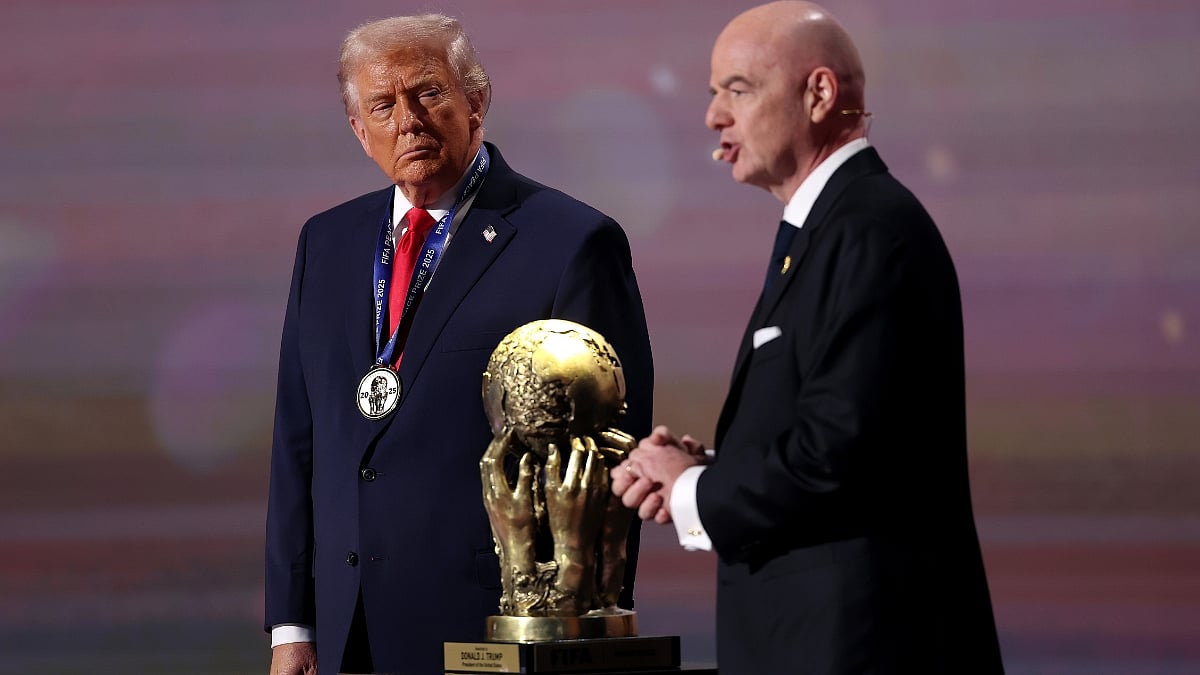
The lack of process and transparency in the FIFA plan can’t be separated from the people and organization promoting it. The proposal might have landed differently had it not come hot on the heels of the festival of greed that was the 2026 World Cup, with its ramped-up ticket prices (including a resale market from which FIFA took a generous cut) and dubious governance. Infantino’s hobnobbing with Trump, including the absurd “peace prize” he presented to the president in December, has eroded his support. This bizarre closeness was reflected in a 15-page statement that the FIFA president posted on Instagram this week, a very Trumpian document that alternates between denunciations of “haters” and professions of love.
If Infantino’s project goes the way of his 2018 venture, he will only have himself to blame. Golden geese require careful stewardship. Kill one through over-eagerness, and you may not find another.
© 2026 Bloomberg L.P.
Sign up for your early morning brew of the BizNews Insider to keep you up to speed with the content that matters. The newsletter will land in your inbox every morning on weekdays. Register here.
Support South Africa’s bastion of independent journalism, offering balanced insights on investments, business, and the political economy, by joining BizNews Premium. Register here.
If you prefer WhatsApp for updates, sign up to the BizNews channel here.
Leave a Reply