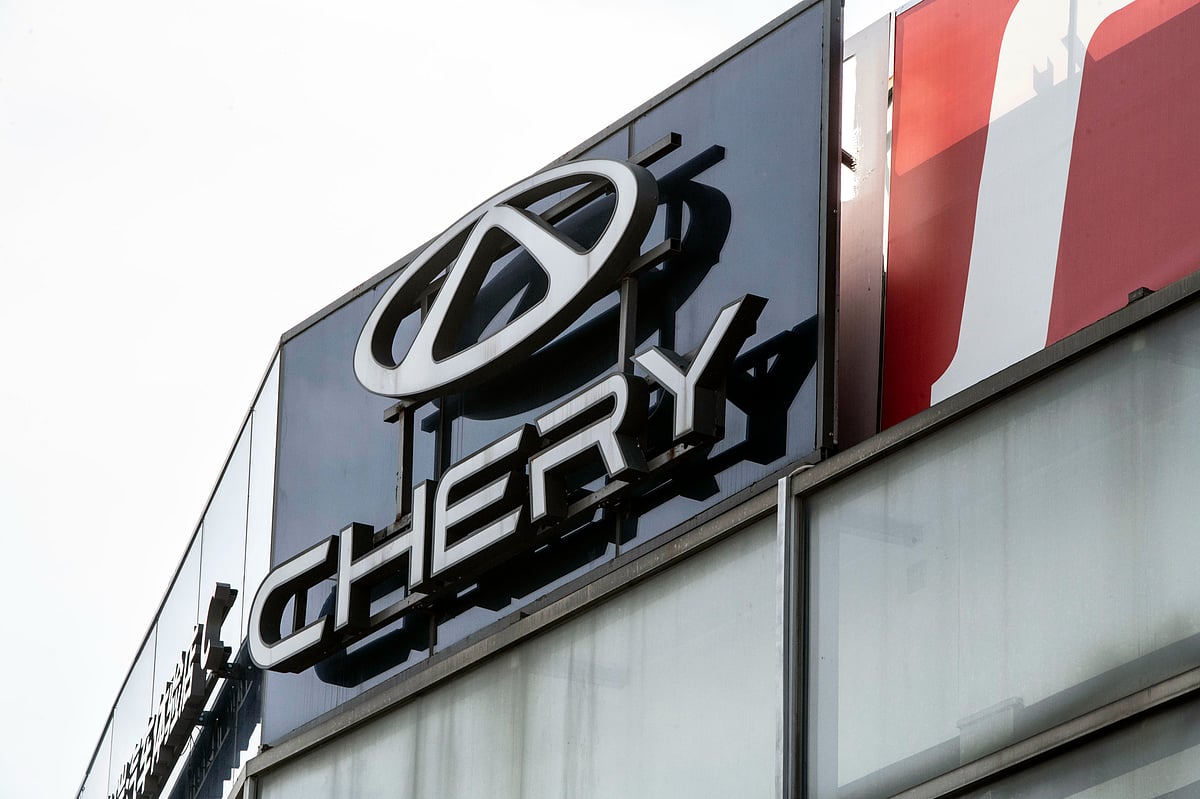
Cameras loved the Rosslyn ribbon-cutting on Friday. As did the controversial politicians Paul Mashatile and Panyaza Lesufi. The substance is thinner. Chery didn’t build a factory — it inherited Nissan’s ageing one – once listed on the JSEW as “Automakers” – promised to retain a few hundred existing workers, and dressed it all up as job creation. The real story is the double-dip: Beijing’s industrial subsidies married to SA’s 30% car price surcharge footed by local consumers who rarely question why they pay so much more for cars than our African cousins. As you might expect from a Mashatile/Panyaza deal, Chery’s local-content commitments remain vague — “40% in the initial stage”. September’s incentive programme review is the tide that will reveal who’s actually swimming naked. Until then, treat the fanfare with the scepticism it deserves.
By Alec Hogg
Davos, a few years back, a corridor conversation with Rob Davies, then still trade and industry minister, deep in the weeds of a World Trade Organisation negotiation. I asked him the obvious question: what won’t South Africa give up? He didn’t hesitate. Motor vehicles. Not agriculture. Not steel. It was Cars. That subsidy, he told me, was untouchable.
I’ve thought about that exchange a lot this week, watching the ribbon get cut at Rosslyn by a Chinese company taking over a tired 60-year-old plant created with such fanfare by a Japanese one.
Chery didn’t build a factory there. It bought one — Nissan’s ageing plant, already circling the drain after Nissan’s global restructuring killed off the NP200. The 692 jobs “created” are Nissan’s existing workers, kept on rather than retrenched. The “nearly 3,000 jobs” figure being trumpeted by the spin doctors is a projection resting on a production ramp that only starts in mid-2027.
For canny observers, the guest list told you everything the press release wouldn’t: Paul Mashatile and Panyaza Lesufi, two politicians whose own reputations could use a service, cheerfully photographed with Chery’s leadership weeks after the former’s well-publicised China trip. Make of that what you will. I certainly did.
Here’s the part nobody’s saying out loud. Chery isn’t just landing in South Africa. It’s landing in the sweet spot between two of the fattest subsidy pools on the planet.
Beijing pours roughly 4% of China’s GDP into supporting its manufacturers — Chery very much included. And every South African who’s ever bought a car has been quietly subsidising the local industry, too, via a 30% import duty that keeps local vehicle prices roughly a third higher than they’d be almost anywhere else in the world.
Double-dip doesn’t begin to cover it. Chery gets cheap capital and state backing at home, and a captive, price-protected market on arrival.
None of this is new in principle. American, European and Japanese carmakers have been living off that same South African subsidy for decades — it’s precisely what Davies was defending when stating the country’s case at the WTO.
What’s new is the sophistication of the operator as they walk through the door. It was only ever a matter of time before a sharp Chinese manufacturer, already fluent in extracting maximum value from state support at home, clocked that South Africa was offering the same deal for free. Chery didn’t find a loophole. It found an open door that’s been standing ajar since apartheid-era industrial policy first decided the motor industry was too important to expose to the market.
The late Charlie Munger had the line for this, the one I keep coming back to: show me the incentive and I’ll show you the outcome.
The Automotive Production and Development Programme pays out duty rebates and production incentives largely regardless of how much of a car is actually built here, and now also dangles export incentives. Chery may well end up making more money exporting cars out of Rosslyn than selling them to South Africans. That’s not industrial renaissance. That’s two governments’ worth of subsidy meeting in the middle, with the South African consumer footing their share of the bill at every dealership in the country.
The local content numbers give the game away. Government’s own target is 60% by 2035. The trade minister concedes progress has been “negligible and lacklustre.” Renai Moothilal, who runs the industry body representing local component makers, puts the real figure closer to 38% — and once you strip out labour and energy costs baked artificially into that number, genuine local component value falls below 15%. Meanwhile the actual component sector, the part of this industry that builds real, durable jobs rather than assembly-line optics, has shed 4,000 positions in two years, with 2,700 more at risk and thirteen plants already closed.
Whether Rosslyn does genuine complete-knocked-down assembly — real local build-up — or the minimal semi-knocked-down version, essentially bolting together kits shipped in from China, is still unknown. Chery has committed to nothing firmer than “40% local content in the initial stage,” a figure Parliament’s own portfolio committee warns lets assemblers duck any real obligation to go further. That vagueness isn’t an oversight. It’s the entire point.
Buffett’s old warning about tides going out applies here as neatly as it does to any balance sheet. The tide, this time, is September’s overdue review of the incentive programme that made all of this possible. Until then, ask the only question that matters whenever a government big-wig smiles for a ribbon-cutting photo: who’s really paying for this “boom” — and who’s simply found the smartest way yet to cash in on a subsidy South Africa has been handing out to foreigners for half a century?
Leave a Reply