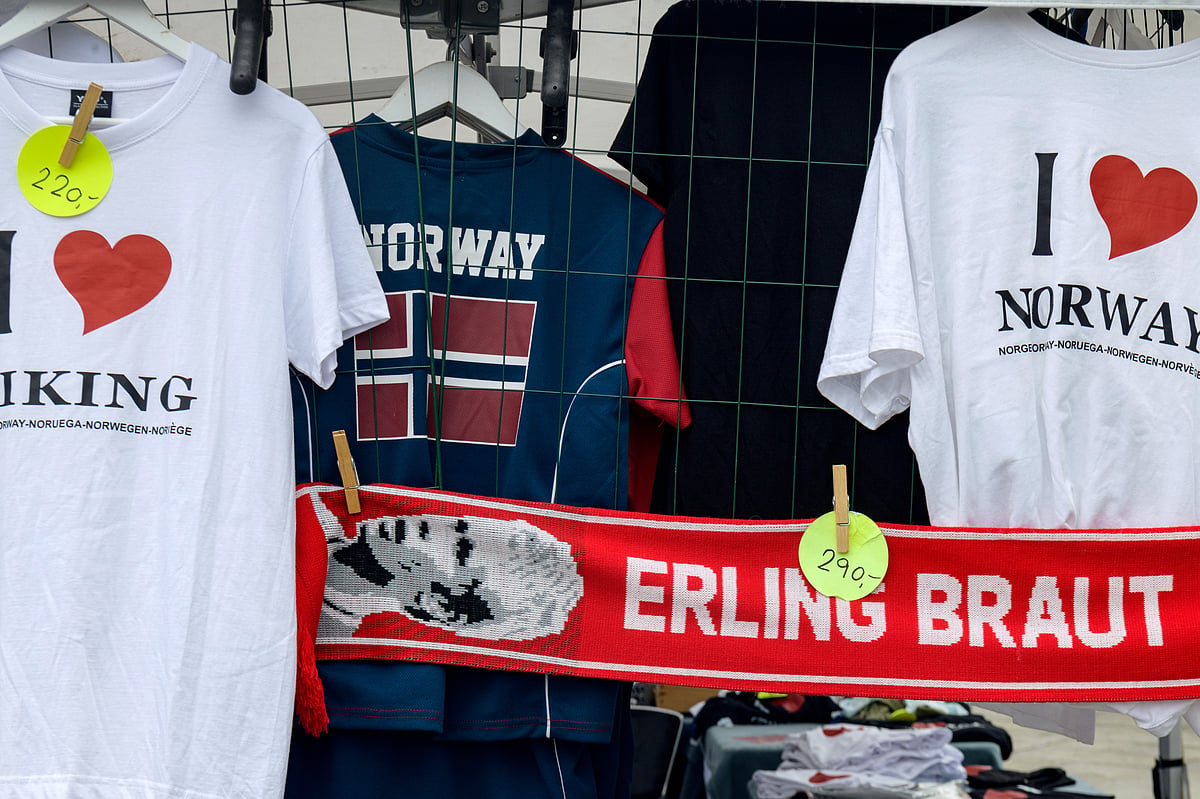
As England gears up to face Norway on the pitch in the 2026 FIFA World Cup quarter-finals, Bloomberg Opinion columnist Adrian Wooldridge argues the real mismatch is economic. Norway kept majority state stakes in its oil, telecoms and banking sectors, taxed resource profits heavily, and built a $2-trillion sovereign wealth fund — while Britain privatised its way to a weaker, more indebted economy. For South Africa, still wrestling with what to do with state-owned enterprises and mineral wealth, the contrast is pointed: Norway shows resource nationalism can work when paired with market pragmatism elsewhere, rather than ideology dictating the whole model. The lesson isn’t state ownership or privatisation — it’s consistency and competent governance, sustained across decades.
By Adrian Wooldridge
Football pundits will exhaust the language speculating about the results of Saturday’s England vs. Norway World Cup match. Will England’s depth win the day? Or will the Viking superstar — the six-foot-five Erling Haaland, strong as a wrestler and swift as a sprinter — tilt it Norway’s way? It is also a good time for their less colourful colleagues, public policy pundits, to say a few words about another matchup: the Norwegian vs. the British economic models.
Britain’s incoming prime minister, Andy Burnham, likes to talk grandly about “ending forty years of neoliberalism” and replacing it with something more egalitarian, redistributive, state-driven and otherwise “progressive.” But then he deflates his case by fixating on Manchester and boasting about renationalising the buses.
Surely Norway would be a better example than a former Lancastrian mill town? Norway and Britain are cut from the same cloth: both founding members of NATO that share the same maritime traditions, the same North Sea Oil reserves and, to some extent, the same gene pools. Haaland was eligible to play for England as well as Norway because he was born in Leeds, and he plays professionally for Manchester City.
Yet when it comes to ideology, they have been quite different. Norway has pursued the opposite of Britain’s privatisation-first economic model. Not only does the state own 67% of the oil company Equinor ASA but it also holds large stakes in Telenor ASA, the country’s biggest telephone operator; Norsk Hydro ASA, its biggest aluminium producer; Yara Intl ASA, its biggest fertiliser-maker; and DNB Bank ASA, its biggest bank.
The Nordic success in preserving a big welfare state in a neoliberal age is striking. Norway spends approximately $9,393 per person a year on healthcare compared with Britain’s $6,747. Norwegian students attend public universities for free while British students are crushed with debt. Britain has seven of the 10 poorest areas in Northern Europe while Norway has zero. In the latest global happiness report, Norway ranked sixth to the UK’s 29th.
Generous welfare rests on a successful economy. Norway has a much higher GDP per capita than the UK — $94,500 versus $57,500 — and a significantly healthier economy. Norway’s debt-to-GDP ratio is roughly 43% while Britain’s exceeds 100%. Since the 2008 crisis, Norway’s average annual growth rate has been about 0.5 to 1 percentage points higher than the UK’s. Norwegian workers generate $162 of economic output per hour compared with a dismal $30-45 per hour (depending on which metric you choose) for the UK.
The most obvious contrast between the two models lies in their approach to North Sea oil. Norway treated it as a collective and generational resource, mandating that half the offshore oil should be collected by a state company, taxing the profits at up to 78% and funnelling money into the world’s largest sovereign wealth fund. By decreeing that the fund could only spend its real return (around 3%) annually, it sheltered the domestic economy from overheating while accumulating a trust fund for its citizens.
By contrast, Britain privatized the entire oil and gas sector, ending all equity participation in 1986, and put the state’s revenues in the general budget, to be used for tax cuts and day-to-day spending. Now the UK has shifted from one ideological extreme to another. While Norway continues to drill in the North Sea, Britain, under the influence of Energy Secretary Ed Miliband, has stopped issuing drilling licenses. The result of these political shenanigans: Norway has a sovereign wealth fund worth more than $2 trillion and a continuing supply of a vital resource, while Britain has no wealth fund and is dependent on importing oil.
A second contrast between the two lies in their relationship with the European Union. Both have seen stormy internal battles over the bloc: Britain joined in 1973 only to leave 47 years later, while Norway voted against joining in 1994, by 52% to 48%. But following the 1994 defeat, Norway pursued a cross-party policy of maximum feasible integration without formal membership, whereas Britain first tore itself apart over what Brexit meant before settling on the most extreme definition. Norway is a member of the European Economic Area, which grants it full access to the EU single market without full political participation. Britain is outside both the single market and the customs union.
The Norway story holds three important lessons for Burnham as he scrambles to construct a new economic model. The first fits in neatly with his progressive ideology. It is hard to look at Norway’s giant sovereign wealth fund or Equinor’s stellar performance and conclude that “state capitalism” is a fool’s game. Norway generated more than twice the revenue per barrel of oil as Britain and used the windfall to generate long-term national wealth. True, there are far more examples of poorly managed state energy companies than well-managed ones, and the performance of Britain’s nationalized sector in the 1970s raises serious worries. Also true, a $2 trillion oil fund means much less for a country with a population of 70 million than a population of 5.7 million. But whatever the denominator, $2 trillion is better than zero.
The second and third lessons are much more awkward for Burnham. One is that it is sensible for a liberal country to continue to drill for oil in a world of climate change. So long as we continue to rely on fossil fuels, it is surely better that you produce them yourself rather than importing energy from authoritarian regimes. Britain’s current policy scores three own goals: It limits the country’s income, increases its dependence on potentially hostile countries and enriches despots.
Why not follow Norway’s example: Take a stake in a private company on condition of opening up the sea beds, pour some of the profits into a sovereign wealth fund, subsidise the transition to green energy and link “progressive capitalism,” or whatever he wants to call it, with saving for the future rather than paying off existing pressure groups.
The most critical lesson, however, is the primacy of pragmatism. The Norwegians have been successful because they have mixed and matched ideas from different ideological traditions rather than just sticking to one: state capitalism when it comes to national resources and free-market capitalism when it comes to the regular economy. They have reached across ideological divides to produce consensus, most notably over the EU. And when they have hit on a successful formula, they have stuck with it not just for the term of a parliament but for decades. Good government is far more important to economic success than ideology, particularly if ideology swings from one extreme to another: That is the most important lesson to draw from this particular Norway vs. UK match.
© 2026 Bloomberg L.P.
Sign up for your early morning brew of the BizNews Insider to keep you up to speed with the content that matters. The newsletter will land in your inbox every morning on weekdays. Register here.
Support South Africa’s bastion of independent journalism, offering balanced insights on investments, business, and the political economy, by joining BizNews Premium. Register here.
If you prefer WhatsApp for updates, sign up to the BizNews channel here.
Leave a Reply