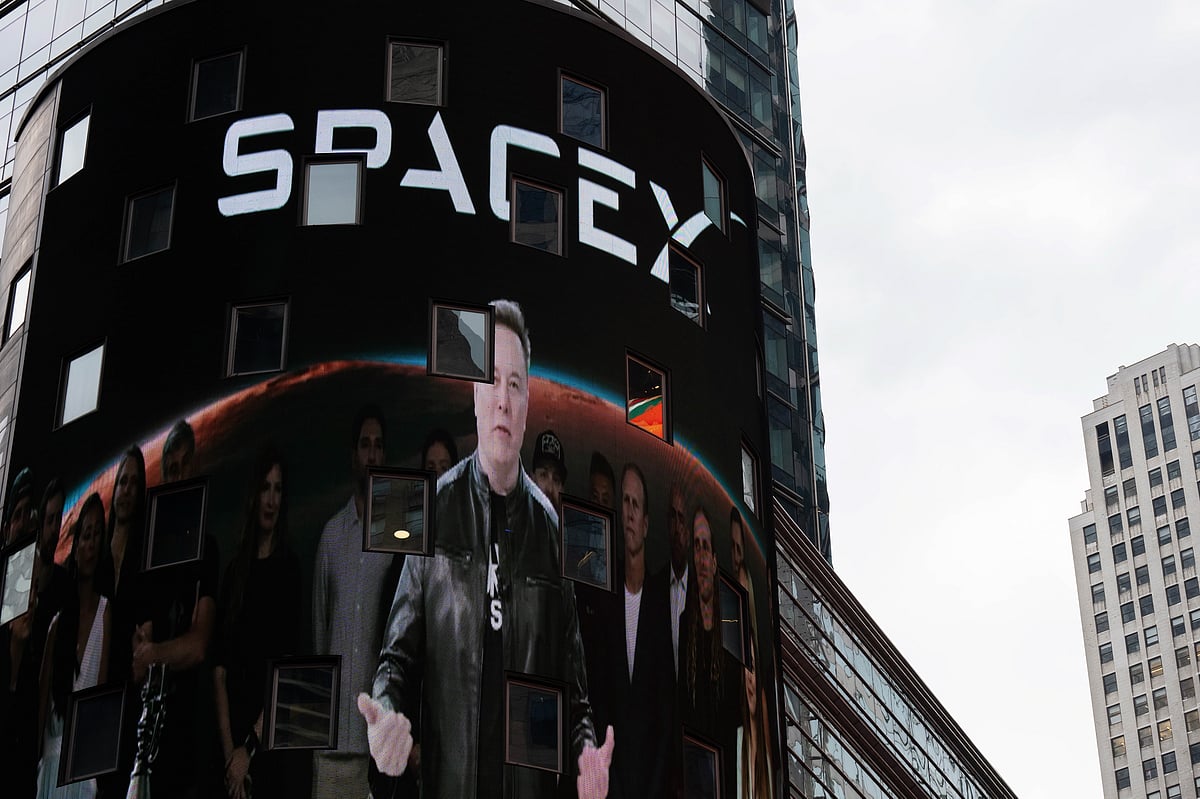
SpaceX shares fell 5.4% Friday to $123.99, dropping well below its $135 IPO price and wiping out over $1 trillion in value from its June peak of $2.64 trillion — now $1.63 trillion. The decline followed a scrubbed Starship launch due to an engine issue, with Musk saying two Raptor engines will be swapped before the next attempt. Analysts remain largely bullish (80%+ buy ratings, average target implying 90% upside), framing the setback as inherent to Starship’s aggressive development pace. Still, some warn that insider lock-up expirations and cooling optimism around SpaceX’s AI/data-center ambitions could pressure the stock further, with broader implications for AI-linked IPO sentiment.
By Arvelisse Bonilla Ramos and Matthew Griffin
SpaceX shares tumbled on Friday, erasing more than $1 trillion in market value from the rocket and artificial intelligence giant’s all-time high.
The stock fell 5.4% to $123.99 per share, giving the company a market value of $1.63 trillion. The value stood at $2.64 trillion at the close on June 16, its third day of trading.
Elon Musk’s company — officially known as Space Exploration Technologies Corp. — initially rallied after the largest initial public offering in history, but has lost ground since and is trading below the $135 IPO price. Friday’s decline comes after the company aborted a launch of its Starship rocket due to an engine issue.
“The failed launch’s timing is suboptimal to the story, but failed launches are always a risk to the story,” said Joe Gilbert, portfolio manager at Integrity Asset Management. “Investors are de-risking positions and rethinking valuations as optimism is slowly eroding from the space and depressing lofty multiples simultaneously.”
SpaceX said it would make another attempt to launch Starship after scrapping Thursday’s mission. Musk later said on X that the company would swap out two Raptor engines, likely delaying the next launch until early next week.
“Anomalies like this will continue to be inherent to Starship’s aggressive development — pushing the boundaries of reusability, payload capacity, and rapid cadence for Starlink V3 deployment and future NASA Artemis missions,” Raymond James analyst Brian Gesuale wrote in a note to clients Friday. Even with the delay, a launch next week would cut the gap between Starship flights to less than 60 days from 221 days previously, Gesuale wrote.
Gesuale initiated coverage of SpaceX on July 7 with a Strong Buy rating and an $800 price target, the highest on Wall Street and about 545% above where the stock ended on Friday.
Starship is the linchpin of SpaceX’s plan to put data centers in space, expand its Starlink satellite communications network and, eventually, to send humans to the moon and Mars. The company has spent more than $15 billion developing Starship, according to its IPO prospectus in June.
“Any meaningful slippage directly affects the scaling of Starlink and Direct-to-Cell services, as cheaper launches are critical for faster satellite deployment,” said Clear Street analyst Greg Pendy.
Royal Bank of Canada analysts Ken Herbert and Jonathan Atkin expect the cost savings from Starship to be a catalyst for unlocking SpaceX’s ambitions including so-called orbital compute, though they cautioned that a reusable launch cadence is “imperative.”
“We can appreciate that the path to de-risking is a non-linear one, and believe the non-linear cadence is something investors could be forced to embrace as well,” Herbert and Atkin wrote in a note to clients.
Bullish Ratings
Despite the recent selloff, Wall Street remains largely bullish, with more than 80% of Bloomberg-tracked analysts rating the stock a buy equivalent. The average price target of $235.34 suggests about 90% upside from current levels.
The company, which joined the Nasdaq 100 Index earlier this month, is facing an extended lock-up on insiders that will see shares periodically released into the market over the coming months.
“If we factor in the lock-ups expiring in the future, many investors have probably re-thought their initial theses, and prospective ones who have been watching from the sidelines are waiting for lower entry points, which have a good chance of emerging as its valuation gets rightsized,” said Mark Malek, chief investment officer at Siebert Financial.
Shares briefly rallied following a Wall Street Journal report that SpaceX is in talks to sell computing power to the US Department of Defense. The company has similar agreements with Alphabet Inc.’s Google and Anthropic PBC.
The slump in shares of SpaceX threatens the boom in IPOs linked to artificial intelligence. AI was at the heart of SpaceX’s pitch for its IPO, as the company eyes data centers in space to help it capture a dominant share of an estimated $26.5 trillion total addressable market.
The record offering boosted activity for Wall Street’s biggest investment banks, which hauled in the most revenue from advising on equity offerings in the second quarter since 2021.
Sign up for your early morning brew of the BizNews Insider to keep you up to speed with the content that matters. Register here.
Support South Africa’s bastion of independent journalism, offering balanced insights on investments, business, and the political economy, by joining BizNews Premium. Register here.
If you prefer WhatsApp for updates, sign up to the BizNews channel here.
Leave a Reply