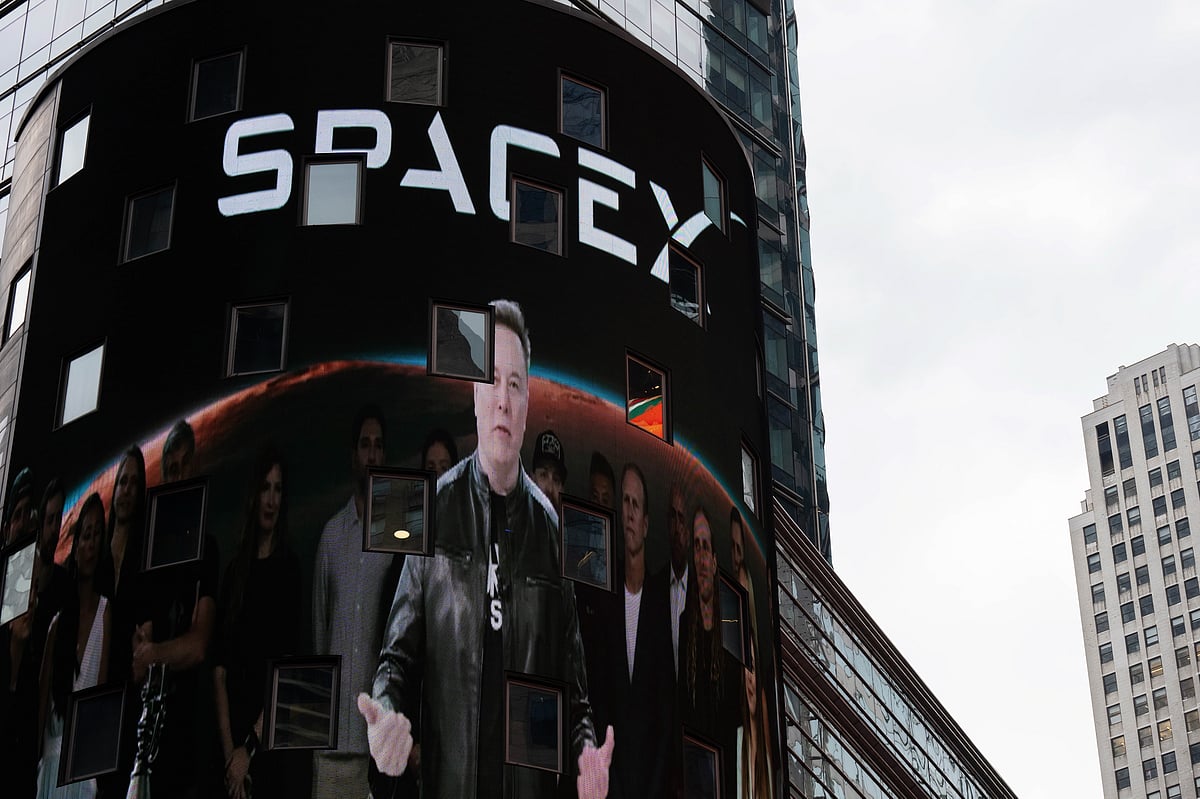
We are proud to publish this exceptional SpaceX research report from David Coutts-Trotter — chartered accountant, former CEO of Sun International, and a valued member of the BizNews tribe. Retail investors are routinely priced out of research this rigorous, while researchers charge handsomely for it, and in SA that means restricting distribution to large institutional investors who often profit from the public’s ignorance. David’s work here levels that field: forensic, sourced, and unafraid to separate verified fact from speculation. We publish it in full because South African investors deserve access to research of this calibre. If you produce work like this and are prepared to share it with our community, we want to hear from you. Help us build a sharper, better-informed investing public.
By David Coutts-Trotter
How to read this report — evidence tags. Every material claim is tagged so verified history is never confused with projection. [VERIFIED] primary / SEC source · [COMPANY] management claim · [3P] third-party estimate · [SPEC] speculative projection · [UNVERIFIED] circulating, unconfirmed. SpaceX listed on 12 June 2026; detail is from the S-1 / 424B4, post-IPO disclosures and the first four weeks of trading, and will be restated at the first public earnings report. The Starlink income model in §6 and the sum-of-the-parts valuation in §12 are our own work with assumptions shown — not company guidance. A † marks a framing, emphasis or question originating with the investor (see §16).
Purpose. A complete standalone reference on SpaceX as a business and as a listed security: factual research plus an agreed view and analytical inputs — not investment advice or a buy/sell call. SpaceX is not currently held directly. The entry stance (§14) is deliberately evaluative: a firmer range commitment waits for the debut earnings report.†

SpaceX priced at a fixed $135 on 11 June 2026, listed on Nasdaq as SPCX on 12 June, sold ~555.6m new Class A shares (all primary — proceeds to the company, no insiders sold in), and with the over-allotment raised ~$85.7bn — the largest IPO in history. Goldman led; Morgan Stanley, BofA, Citi and JPMorgan joined. It closed day one at $160.95 (+19%), ran to an intraday all-time high of $225.64 on 16 June as listed options began trading (~$2.68tn market cap), corrected to an all-time low of $147.11 on 23 June, and entered the Nasdaq-100 on 7 July at roughly $152–161. The round-trip took eighteen trading days: a thin-float melt-up and its unwind, with fundamentals largely a spectator.


2.2 The free float is tiny — and that is the price story
The IPO floated only ~4.2–4.3% of the equity; the remaining ~95.7% is locked. Nasdaq scrapped its 10% minimum-float rule and applies a 3x weighting multiplier, so the ~4.3% float is treated as ~12.9% for index weighting. On 7 July SPCX entered the Nasdaq-100 under the new ‘fast entry’ rule (15 trading days, versus the prior three-month minimum). JPMorgan estimated ~$4.3bn of forced QQQ-complex buying; the full index complex (Nasdaq-100 + FTSE Russell + MSCI) was estimated at up to ~$27bn. [3P] The inclusion-day move itself was muted — down ~1–2% pre-market, a textbook buy-the-rumour outcome, with the passive bid front-run over the prior week. The base-rate precedent is Palantir and Strategy: both peaked around index inclusion and sold off hard after. A mechanical supply/demand squeeze cuts both ways.
2.3 The lock-up calendar — the medium-term price force

The structure matters more than any single date: supply is near zero until the first earnings report, then builds in steps to the December cliff. A ~5% friends-and-family tranche had no lock-up at all. Until the first report, the current absence of insider selling is structural, not a signal of confidence — and the window between the first-report unlock and 8 December is the highest-probability drawdown window.
2.4 The cap table

3 Economics vs control — both companies
Musk’s economic interest, separately from his votes, is what actually drives his incentives in a merger.


Tesla is one-share-one-vote; Vanguard, BlackRock and State Street together hold more than 15%. Musk’s 2018 ‘Tornetta’ pay award (rescinded by Delaware Chancery in 2024) was restored on appeal in December 2025; a new 2025 performance award (headline approaching ~$1tn if all milestones hit) was approved in November 2025 and could lift his Tesla voting toward his stated ~25% goal. Tesla reincorporated in Texas. His net worth crossed $1tn at the IPO — the first trillionaire — which changes nothing operationally and everything reputationally.
4.The business stack
SpaceX is a layered stack where each layer funds and enables the one above. Falcon and Starlink pay the bills today; Starship is the enabler; SpaceXAI and the compute business are the growth frontier; the Mars mission sits on top, generations out. Three reporting segments: Connectivity (Starlink), Space (launch), and AI. xAI was acquired all-stock on 2 February 2026 (0.1433 SPCX shares per xAI share, marking the combined company at ~$1.25tn) and rebranded to ‘SpaceXAI’ on 6 July — a brand change only; the ticker and legal filings are unchanged. [VERIFIED]
4.1 Falcon — the workhorse
[VERIFIED] 165 Falcon missions in 2025 — more than the rest of the world combined — carrying ~2,213 tons to orbit (>80% of global mass; ~85% of the US total). One booster has flown 28–29 times; ~95% of launches reused a booster; the 500th landing has passed; Block 5 reliability runs ~99.8%. The cadence has continued into 2026: the 79th Falcon 9 launch of the year flew on 1 July. Management expects 2025–26 to mark ‘peak’ Falcon as missions migrate to Starship.
4.2 Starship — the gate everything upstream depends on
[VERIFIED] Flight 12 (22 May 2026), the first V3 flight, was a partial success: the Ship deployed 22 payloads and reached its splashdown, but Super Heavy Booster 19’s Raptor 3 engines failed to relight for the boostback burn and the FAA declared a mishap on 27 May, grounding the vehicle. Ship 40 passed a full six-engine 60-second static fire on 2 July; Flight 13 is targeted for later in July — likely another splashdown profile, with the first booster catch not before Flight 14. Starship is the single chokepoint asset: full reusability at cadence is what collapses cost-to-orbit and underwrites Starlink V3, orbital compute, the gigasat factory and Mars. A clean Flight 13/14 de-risks two segments at once; another booster failure pushes both the V3-constellation and orbital-compute timelines further out in time.
4.3 The segments in numbers
[VERIFIED] Consolidated 2025: revenue $18.674bn (+33%), adjusted EBITDA +$6.584bn, GAAP net loss $(4.94)bn, accumulated deficit $41.3bn. Q1 2026: revenue $4.694bn (+~50% YoY), net loss $(4.28)bn. By segment — Connectivity (§6): $11.387bn 2025 revenue, $4.42bn operating income; $3.257bn revenue and $1.188bn operating income in Q1 2026 alone. Space: ~$4.1bn 2025 revenue at a deliberate $(657)m operating loss (~$3bn of Starship R&D). AI: $3.201bn 2025 revenue at a $(6.355)bn operating loss on $12.727bn capex — 61% of group capex; Q1 2026 AI capex was $7.723bn (~$30bn annualised).

5. The Algorithm & the idiot index
Vertical integration is the source of the moats, and it is produced by a specific, named operating method — ‘the Algorithm.’ It is easy to write down and brutally hard to execute; the execution, not the idea, is the barrier.†
5.1 The idiot index
[VERIFIED] Musk’s core diagnostic (per Isaacson) is the idiot index: the ratio of a finished part’s total cost to the cost of its raw materials. A part that costs many multiples of its raw-material content is a signal — not that the material is expensive, but that the design is too complex or the manufacturing process too inefficient. A high index is the trigger to question the design, bring the part in-house, and redesign or re-process it until the ratio falls. The canonical example: an actuator quoted at $120,000 that a SpaceX engineer redesigned and built in-house for $3,900. Pushed to its limit across thousands of parts, the index is what forces the vertical integration — engines, avionics, satellites and ground terminals all made in-house — because each bought-in part with a high index is a standing invitation to insource. The point is not that the metric is clever; it is that the organisation can actually act on it, repeatedly and cheaply.†
5.2 The Algorithm — the five steps
The Algorithm is Musk’s five-step engineering process, applied in a deliberately counter-intuitive order. Most organisations invert it — they automate and optimise a process that should have been deleted.

[VERIFIED] The cultural prerequisite is the genuinely hard part: a junior engineer must be able to tell a senior one that a requirement is ‘dumb’, with a name attached. Musk himself got step 5 wrong at Fremont/Nevada (over-automation) and, in his words, ‘put a hole in the side of the building’ tearing the robots back out.
5.3 The Algorithm in metal
Raptor 3: external plumbing and wiring fused into the engine structure and the heat shield deleted via 3D printing — 3,362 lb at 280 tf of thrust (vs Raptor 2’s 3,594 lb at 230 tf). Musk: ‘getting close to the limit of known physics.’ Grid fins: the folding mechanism deleted after simulation showed minimal impact — the example that prompted Musk to articulate the Algorithm publicly. Starlink terminal: an antenna once costing ~3x a terrestrial modem cut ~50% via in-housing and simplification; manufacturing cost reportedly fell ~59% in 2025; the Mini now retails from ~$299. [VERIFIED/3P]

6. Starlink — the engine, and a P&L to 2030
[VERIFIED] Starlink is the only profitable division and the cash flywheel for everything else. 2025: revenue
$11.387bn (+49.8%), operating income $4.42bn (39% margin), segment adjusted EBITDA $7.168bn (~63% margin). Q1 2026 (the freshest filed data): revenue $3.257bn — 69% of company revenue, up ~57% year on year — operating income $1.188bn, segment adjusted EBITDA $2.087bn, ~10.3m Starlink Subscribers across 164 markets, served by ~9,600 satellites. The subscriber ladder: 2.3m (2023) → 4.4m (2024) →
8.9m (2025) → 10.3m (Mar 2026) — and on 4 June the company announced it had crossed 12m ‘active customers’ [COMPANY], a broader marketing metric than the filed paying-subscriber count; the two should not be conflated. Direct-to-cell served ~7.4m monthly unique devices via ~650 dedicated satellites as at 31 March [VERIFIED], with management claiming >10m Mobile ‘subscribers’ at MWC and targeting 25m total users by end-2026 [COMPANY]; Quilty’s independent forecast is ~16.8m [3P].
6.1 The revenue inflection — and the ARPU trade
[VERIFIED] Growth is subscriber doubling plus high-ARPU verticals: maritime (~$34k average annual revenue per user), aviation (~$300k per commercial aircraft — American Airlines signed in May 2026; United has 300+ aircraft live, targeting its full 1,000+ fleet by end-2027), enterprise (>$1.6bn run-rate), government/Starshield, and direct-to-cell on the EchoStar spectrum (FCC approval 12 May 2026; exclusive nationwide licences transferring fully in late 2027). Blended monthly ARPU — average revenue per user, the filed metric: service revenue divided by average subscribers per month — fell from ~$99 (2023) to $81 (end-2025) to $66 (Q1 2026) as the mix shifted deliberately into lower-income markets.
That volume-for-price trade partly reversed in May 2026 with the first broad consumer price rises in years ($5–10/month across Residential and Roam) — a signal of the shift from pure subscriber acquisition toward monetising the installed base. Whether ARPU stabilises above $66 after the rises is the single most informative number at the first earnings report.†
6.2 The model — the base case, and a TAM-anchored bull


6.3 Base-case income statement

Competition is directionally real but far behind: Amazon Leo passed ~375 satellites after the final Atlas V flight on 2 July — the third-largest constellation, targeting initial service later in 2026, but against Starlink’s ~10,400+ active spacecraft (~59% of everything in orbit), and still short of its own FCC milestone of 1,618 satellites by 30 July (extension requested). [VERIFIED/3P] Chinese constellations remain nascent. V3 satellites (1 Tbps down, ~100x data density) are gated on Starship and targeted for H2 2026 deployment.
7. Human capital — the bench and the blueprint
Because key-person risk is the spine of the whole investment (§13), the depth and quality of the bench is central, not incidental — it is the single best evidence on whether the institution can outlast its founder.†
7.1 The bench

7.2 Musk-linked, or mission-linked?
The honest read is both — and the balance is shifting. Musk set the mission and recruited the core, so the gravity is real. But the institution is increasingly self-standing: Shotwell’s execution machine, a deep VP layer, a culture (§5) that reproduces itself, and — new since the IPO — broad equity wealth that both rewards staying and could fund departures. One engineer described joining as being ‘dropped into a shocking zone of competence.’

8. Compute economics & space compute
8.1 The Colossus speed advantage — and the contracted book
[VERIFIED] On the BG2 podcast, Nvidia’s Jensen Huang said of the Colossus build: getting a 100,000-GPU cluster from hardware install to training took ~19 days, versus an industry norm he framed as ~4 years — ‘superhuman… as far as I know, there’s only one person in the world who could do that.’ Musk put the full build at 122 days. That speed is the source of the return: capacity earning rent years before a normal builder could bring it online. Colossus + Colossus II total ~1.0GW; the next phase adds at least 220,000 GB300 processors and over 400MW.

Run-rate: ~$2.32bn/month once Reflection ramps — ~$27.8bn annualised, against a segment that booked only $3.2bn in all of 2025, because the leases began ramping in May–June 2026. Implied pricing (~$7.78/GPU-hour) sits well above market on-demand rates (~$3–4) — a take-or-pay capacity reservation at a scarcity premium. The S-1 states plainly: ‘We expect to enter into additional similar services contracts.’
8.2 Demand durability — the shortage is the underwriting fact
[3P] The AI compute market remains structurally short as at mid-2026, and the evidence is specific. The SemiAnalysis rental-price index for Nvidia H100 chips (the workhorse AI processor) rose ~40% to
$2.35/hour by March 2026, with all new capacity to Aug–Sep 2026 pre-booked and on-demand capacity sold out across chip types. Nvidia’s Jensen Huang cited over $1 trillion of order visibility for the Blackwell and Rubin chip generations through 2027. Hyperscaler capital spending is tracking ~$700bn in 2026 (Moody’s), with ~$870bn projected for 2027. The two key upstream inputs — HBM (high-bandwidth memory, the specialised memory stacked next to AI chips) and CoWoS (TSMC’s advanced chip-packaging process, the assembly step that binds chip and memory together) — are sold out into 2027, and SK Hynix, the Korean memory maker that dominates HBM supply, forecasts shortage ‘until 2030’ via its chairman. Microsoft’s Nadella frames the binding constraint as power, not chips: ‘a bunch of chips sitting in inventory that I can’t plug in… I don’t have warm shells to plug into.’

8.3 The honest fragility: quality, not demand
The risk is not that the compute goes unsold — it is that some of this is rent on hardware the group could not fully use itself. Colossus 1 reportedly ran at ~11% model-FLOPs utilisation — MFU, the share of a chip fleet’s theoretical maximum computing throughput actually used productively during model training; production-grade clusters run 35–45% — because its mixed generations of GPUs could not parallelise Grok training efficiently. [3P — The Information / an internal memo; contested] So part of the lease book monetises surplus, timed to the IPO. Both points are true at once: the demand is real and durable, and a portion of the revenue is lower-quality than ‘frontier-model compute in hot demand.’ Two mitigants: Anthropic uses the capacity primarily for inference (serving users), where the mixed-architecture penalty largely disappears, and Colossus II is uniform current-generation Blackwell hardware.
8.4 What a competitor cannot buy: speed-to-power
Grid interconnection queues run 4–7 years in the key US markets; large-frame gas turbines are booked through 2028 at ~3-year lead times; high-voltage transformers stretch to ~5 years. [3P] SpaceX’s answer is off-grid: the Stateline Power joint venture with Solaris Energy Infrastructure (over 500MW of turbines under a 10-year master rental from January 2027, plus a ~$2.0bn mobile-turbine purchase, building to over 1.1GW by Q2 2027), buffered by Tesla Megapack batteries. The defensible claim, stated precisely: SpaceX delivers fully-powered compute, fast — it does not generate the power itself. Replicating ~1GW of powered, operational AI compute today would take a competitor three to five years. That scarcity, not the leasing, is the moat.†

8.5 Space compute — first mover, but years out
[COMPANY/SPEC] The orbital-data-centre ‘AI1’ satellite (revealed June 2026) carries ~150kW of peak compute (about one GB300 rack), a ~70m solar span and deployable liquid radiators, reusing the Starlink V3 bus; the FCC filing covers up to 1m satellites; the Gigasat factory in Bastrop, Texas (>11m sq ft) targets volume production from end-2027 and ~1GW/yr of orbital compute. Nvidia’s Space-1 module gives the chip roadmap a named partner. Two honest qualifiers: thermal dissipation in vacuum is the genuine unsolved constraint at AI-rack power density — each AI1 must reject more heat than the entire International Space Station — and SpaceX is not alone (Google’s Project Suncatcher, Starcloud, Axiom, Nvidia, China). The maths is also brutal: ~6,000–8,300 AI1s to match one 1GW terrestrial centre. First-mover on launch economics, yes — but the whole leg is gated on Starship cadence, and ‘as early as 2028’ deployment is [SPEC].
9. SpaceXAI — models, X and Cursor
The AI segment is more than the compute it rents out: it is the models, X’s distribution, and — newly — a coding-frontier product. The honest picture as of mid-2026 is a lagging model paired with a genuinely strong applications and distribution position.†
[VERIFIED/3P] Model standing: Grok sits around fourth-to-fifth on independent intelligence rankings — Musk himself has publicly ranked it #5, behind DeepSeek — and Grok 5 has slipped repeatedly and is unreleased. Organic AI revenue is small: ~$3.2bn in 2025, most of it legacy X advertising, roughly a fifteenth of Anthropic’s run-rate. The rebuild: Musk gutted and rebuilt the AI arm’s leadership through early 2026 — the original co-founders departed and 80-plus researchers left — replacing them with SpaceX/Tesla operational lieutenants (Nicolls as president, Shotwell on operations). Execution and capital discipline are up; frontier-research leadership is unproven, and the marquee research-talent flow has been outbound.
[VERIFIED] Cursor changes the coding story. The group is acquiring Cursor (Anysphere) for $60bn all-stock — the April compute-and-option agreement exercised on 16 June, expected to close Q3 2026, exchange ratio set at the 7-day volume-weighted average price before close (~$1.5bn breakup fee, ~$8.5bn compute walk-away). Cursor brings ~$4bn of annual recurring revenue (~$2.6bn enterprise), ~4m developers, and a product at or near the coding frontier — its in-house Composer model matches the leaders on key coding benchmarks at roughly a tenth of the cost. Coding is the most monetisable near-term AI vertical and was the group’s weakest point; owning Cursor moves it from coding laggard to one of the two or three strongest coding franchises in the industry. The neutrality caveat is real: Cursor becomes captive to a model competitor.

10. The constellation, the related-party web & TeraFab
SpaceX is the central node of a constellation of Musk companies, each removing a constraint that would bottleneck the others. Tesla supplies chips (AI5/AI6/Dojo3), Optimus robots and Megapacks, and co-funds the TeraFab; Alphabet owns ~6% of SpaceX while paying it ~$920m a month for compute; Tesla holds ~19m SPCX shares plus the converted $2bn xAI stake. The integration is real and compounding — and it is a dense related-party web that is simultaneously synergy and litigation surface.

10.1 TeraFab
[VERIFIED] Intel joined as foundry partner on 7 April 2026, contributing its 18A process — Intel’s most advanced chip-manufacturing node, roughly equivalent to a 1.8-nanometre-class technology — with SpaceX leading the initial scaled phase. Construction is underway at Giga Texas; filings around the Grimes County tax hearing put Phase 1 at ~$55bn and the full buildout at up to $119bn, with a ~$20–25bn pilot. The sceptics’ case is substantial: 18A production yields run ~65% (meaning roughly a third of chips off the line fail), Morgan Stanley sees meaningful output only in 2028–30, and the sharpest characterisation — ‘an Intel fab expansion with Tesla/SpaceX as anchor customers, dressed up as a moonshot’ — may be right. The S-1 itself calls TeraFab ‘very early stage’ with no binding commitments. Marked at $20–40bn: strategic supply insurance plus fab equity, with the 1-terawatt vision carried at zero.
11. The Tesla-merger question
A major live question and one of the larger potential value-unlocks in the story — but not the spine of the investment; that remains key-person risk (§13).†
11.1 The house view

12.2 Where the market and analysts sit — reported, not adopted
[3P] External benchmarks sit below the house view near-term and rise with the horizon — the market is pricing timing risk, not thesis risk. Polymarket: ~25% for an announced merger by 31 December 2026.
Kalshi: ~24% within 2026, rising to ~52–53% by May 2027 (Kalshi resolves on a signed agreement — a higher bar than announced). Wedbush’s Dan Ives is closest to the house view: ‘shocked’ if they do not merge within a year, odds at ‘80%, 90% type of chance,’ finalising H1 2027. Shotwell on IPO day said a merger ‘might make Elon’s life a little easier’ and noted ‘a convergence’ — the first senior softening. Musk said ‘No’ to combining his companies as recently as July 2025.

11.3 The arguments, both sides

The central irony — conflicts down, key-man up

12. Valuation — the stack, and the price
12.1 Where the published marks sit
The underwriter quiet period expired on 7 July 2026 and the initiations, all published that day, are near-unanimously bullish: Morgan Stanley Overweight $300 (bull case $600), Deutsche Bank Buy $255, Macquarie Outperform $250, Cantor Overweight $246, Bernstein Outperform $239, BofA Buy $235, Wells Fargo Overweight $230, JPMorgan Overweight $225, RBC Outperform $225, Clear Street Buy $217, UBS Buy $210, Goldman Buy $205, Citi Buy $200, Mizuho Outperform $200, Needham Buy $200 — consensus average ~$205 (MarketBeat) — with Raymond James a $800 Strong Buy outlier and MoffettNathanson the lone bear at Neutral $131. [VERIFIED — all dated 7 Jul 2026] The independent anchors, published pre-listing in early-to-mid June, sit far lower: Morningstar fair value $63 (3 Jun), CFRA Sell $115 (12 Jun), New Street $165, Wolfe $175, Oppenheimer Outperform $190 (later raised to $250 on the Cursor deal), Damodaran’s intrinsic ~$1.25–1.35tn (~$95–100/share), and Chanos (~16 Jun): ‘probably now at about 110 times revenues… history tells us you just never really make much money buying equities at over 100x revenues.’ The sell side prices aggressive AI monetisation as base case; the critics price the proven core and discount the rest. Our own stack below sits between them, closer to the critics.

12.2 The sum of the parts
Each segment is valued on its own evidence and the pieces are summed — our work throughout, with the basis stated per leg:


13. Risks — key-man as the spine


14. The entry question — evaluative, gated on the first report

The report date itself is unconfirmed — third-party estimates run from early August to early September; watch for the 8-K. Two external clocks run alongside: the OpenAI/Anthropic listings (the AI-mark test, §9) and Flights 13–14 (the Starship gate, §4). The supply calendar (§2.3) then defines the buying window: between the first-report unlock and the 8 December lock-up cliff, supply becomes a buyer’s friend for the first time since listing.
15. Sources & source quality

Sign up for your early morning brew of the BizNews Insider to keep you up to speed with the content that matters. The newsletter will land in your inbox every morning on weekdays. Register here.
Support South Africa’s bastion of independent journalism, offering balanced insights on investments, business, and the political economy, by joining BizNews Premium. Register here.
If you prefer WhatsApp for updates, sign up to the BizNews channel here.
Leave a Reply